Xixuthrus heros (Fabricius, 1775)
Taxonomic Classification
Kingdom: Animalia
Phylum: Arthropoda
Class: Insecta
Order: Coleoptera
Family: Cerambycidae
Subfamily: Prioninae
Tribe: Prionini
Genus: Xixuthrus
Species: Xixuthrus heros
Common Names: Giant Fijian longhorn beetle, Fijian giant longicorn
Morphological Description
General Characteristics
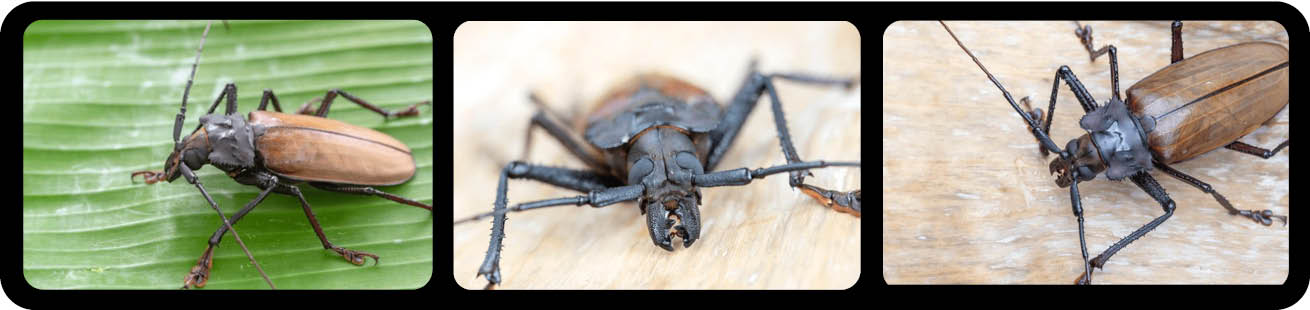
Xixuthrus heros represents one of the largest beetle species globally and is the largest longhorn beetle in the Oceanian region. The species exhibits the robust, elongate body form characteristic of prionine beetles, with distinctive morphological features that distinguish it from related species. Wikipedia
Size and Dimensions
Adult specimens display considerable sexual size dimorphism and individual variation:
- Body length (males): 80-120 mm (excluding mandibles)
- Body length (females): 100-150 mm (excluding mandibles)
- Maximum recorded length: Approximately 150 mm for females
- Body width: 35-55 mm at the widest point of elytra
- Mandible length (males): Can reach 25-35 mm in large specimens
- Total weight: Up to 30-40 grams in large females
Head and Mouthparts
The head is large, prognathous, and strongly sclerotized. Mandibles exhibit pronounced sexual dimorphism: males possess greatly elongated, curved mandibles with prominent teeth, while females have shorter, more robust mandibles better suited for chewing wood. The mandibles in males can represent up to one-quarter of total body length in extreme specimens. Compound eyes are large, reniform, and deeply emarginate, nearly divided by antennal insertion. The labrum is transverse and setose along the anterior margin. Maxillary and labial palpi are well-developed with the terminal segments securiform (hatchet-shaped).
Subfamily Prioninae of the World I.
The Prionids of the World
The Prionids of the Neotropical Region
The Prionids Collection Bundle
Antennae
Antennae are eleven-segmented and sexually dimorphic:
- Males: Antennae reach approximately to the middle or apical third of elytra, segments 3-10 serrate with distinct projections
- Females: Antennae shorter, reaching approximately to basal third of elytra, less strongly serrate
- Scape: Large, robust, cylindrical
- Flagellum: Gradually tapering toward apex
Thorax
Pronotum: Transverse, approximately 1.5 times broader than long. Surface rugulose-punctate with a median longitudinal impression. Lateral margins with 2-3 acute spines, the anterior spine most prominent. Anterior angles acute; posterior angles obtuse.
Prosternum: Intercoxal process broad, slightly convex, and punctate.
Mesosternum: Short, with a narrow intercoxal process.
Metasternum: Large, convex, densely and coarsely punctate.
Scutellum: Triangular to subtriangular, broader than long, with sparse pubescence.
Elytra
The elytra are elongate, robust, and cover the entire abdomen. Coloration ranges from dark reddish-brown to nearly black, sometimes with a mahogany or chestnut hue. The elytral surface is coarsely and densely punctate, particularly on the basal half. Each elytron possesses 2-3 weak longitudinal costae that become less distinct toward the apex. The humeral region is prominent and rounded. The apex of each elytron is individually rounded, occasionally with slight dehiscence at the suture. The epipleuron is broad basally, gradually narrowing posteriorly.
Wings
The metathoracic wings are fully developed and functional. Wing venation follows the typical cerambycid pattern. Despite their large size, adults are capable of sustained flight, particularly during dispersal and mate-seeking behavior.
Legs
All three pairs of legs are robust and strongly developed:
- Femora: Clavate, particularly the metafemora which are distinctly swollen
- Tibiae: Cylindrical, slightly curved, with apical spurs
- Tarsi: Formula 5-5-5; tarsomeres broad, densely pubescent ventrally; fourth tarsomere deeply bilobed; claws simple
- Coloration: Similar to body, dark reddish-brown to black
Abdomen
The abdomen consists of five visible sternites. Sternites are densely punctate and sparsely pubescent. The terminal sternite is rounded in females and slightly emarginate in males. The pygidium is not exposed beyond the elytral apices.
Sexual Dimorphism
Pronounced sexual dimorphism is evident:
Males:
- Smaller overall body size
- Greatly elongated, curved mandibles with prominent teeth
- Longer antennae relative to body length
- More slender habitus
- Narrower abdomen
Females:
- Larger, more robust body
- Shorter, stouter mandibles
- Shorter antennae
- Broader abdomen for egg development
- Generally heavier and more massive
Geographic Distribution
Xixuthrus heros is endemic to the Fiji Islands in the South Pacific, with distribution including:
Primary Islands
- Viti Levu: The main island where the species is most commonly recorded
- Vanua Levu: The second-largest island with confirmed populations
- Taveuni: Smaller populations documented
- Kadavu: Occasional records
Distribution Patterns
The species appears to be most abundant on the larger islands (Viti Levu and Vanua Levu) where extensive forest habitat remains. Records from smaller islands are sporadic and may represent marginal populations or recent colonizations. The limited geographic range of the species raises conservation concerns, as the entire world population is restricted to this small archipelago.
Altitudinal Range
X. heros has been recorded from sea level to approximately 1,200 meters elevation, though it appears most common in lowland and foothill forests between 100-600 meters.
Habitat and Ecology
Habitat Preferences
Xixuthrus heros inhabits various forested environments within the Fiji Islands:
- Primary lowland tropical rainforest
- Secondary forest with mature trees
- Forest edges and clearings with standing dead wood
- Coastal forests and littoral vegetation
- Montane forest up to mid-elevations
The species shows particular association with areas containing large, mature trees and abundant decaying wood substrates.
Life Cycle and Development
The complete life cycle of X. heros is prolonged, characteristic of large-bodied prionine beetles.
Egg Stage
Females oviposit in crevices in the bark of dead or dying trees, typically selecting larger diameter trunks and branches. Eggs are elongate-oval, approximately 6-8 mm in length, and creamy white in color. The number of eggs produced per female has not been definitively documented but is estimated at 50-150 eggs based on dissections and observations of related species. Incubation period is approximately 2-4 weeks depending on temperature and humidity.
Larval Stage
Larvae are typical prionine type: elongate, cylindrical, with a robust body and reduced legs. The larval stage is the longest phase of development:
Duration: 3-5 years (estimated), possibly longer in suboptimal conditions
Habitat: Larvae bore into decaying hardwood, creating extensive galleries. They appear to prefer certain tree species, though host specificity has not been thoroughly studied.
Development: Larvae pass through multiple instars (estimated 8-12), growing substantially with each molt. Mature larvae can reach 120-150 mm in length and 15-20 mm in diameter.
Feeding: Larvae consume decayed wood tissue, likely relying on symbiotic microorganisms to digest cellulose and lignin. Frass (excrement) is pushed out of galleries, creating characteristic accumulations beneath infested wood.
Pupal Stage
Pupation occurs within the larval gallery, typically in an enlarged chamber constructed by the final instar larva:
Pupation chamber: Approximately 80-100 mm long and 40-50 mm in diameter, often located 10-30 cm below the wood surface
Duration: 3-6 weeks
Pupa characteristics: Exarate (appendages free from body), initially pale but darkening as development progresses
Adult Stage
Adult emergence is seasonal, typically occurring during the warmer, wetter months (November-March in Fiji):
Emergence: Adults chew exit holes in the wood substrate, leaving characteristic large circular emergence holes (30-40 mm diameter)
Adult longevity: Estimated at 6-12 weeks based on field observations and captive specimens
Feeding: Adults are believed to feed minimally or not at all, relying on energy reserves from larval development. Some observations suggest adults may take moisture or feed on plant saps.
Activity period: Peak adult activity occurs from December to February
Behavior
Activity Patterns
Xixuthrus heros adults are primarily crepuscular and nocturnal. During daylight hours, beetles remain concealed in bark crevices, tree hollows, or ground debris. Activity increases dramatically at dusk, with peak movement occurring in the first 2-3 hours after sunset.
Flight Behavior
Despite their impressive size and weight, adults are strong fliers. Flight appears to serve primarily for:
- Dispersal from emergence sites
- Mate location and reproductive dispersal
- Colonization of new habitat patches
Flight is most common during warm, humid evenings. Males appear to be more active fliers than females.
Attraction to Light
Adults exhibit strong positive phototaxis and are readily attracted to artificial lights, particularly mercury vapor and ultraviolet lights. This behavior has facilitated collection and study of the species.
Defensive Behavior
When threatened, X. heros displays several defensive responses:
Stridulation: Adults produce audible squeaking or hissing sounds by rubbing body parts together, likely the pronotum against the mesonotum
Biting: The powerful mandibles, especially in males, can deliver painful bites. Large males can reportedly bite through soft pencils or draw blood from handlers
Death feigning (thanatosis): Some individuals may remain motionless when disturbed, feigning death
Leg autotomy: In extreme circumstances, beetles may autotomize (self-amputate) legs to escape predation
Reproductive Behavior
Specific courtship and mating behaviors remain poorly documented in natural settings. Observations suggest:
- Males likely use pheromones to locate females
- Mating occurs on tree trunks or branches
- Copulation may last several hours
- Females search for suitable oviposition sites after mating
Natural Enemies and Mortality Factors
Predators
Natural predators of X. heros likely include:
- Birds (particularly species that feed on large insects)
- Small mammals (rats, potentially fruit bats investigating decaying wood)
- Reptiles (large geckos, skinks)
Parasites and Pathogens
- Parasitic mites (Acari) have been observed on adult beetles
- Fungal infections may affect larvae in wood substrates
- Nematodes potentially parasitize larvae
Abiotic Mortality Factors
- Cyclones and severe storms (common in Fiji) cause tree mortality and affect habitat
- Flooding of lowland areas may drown larvae in submerged wood
- Drought conditions may increase larval mortality in drying wood
Host Plants
While comprehensive host plant studies are lacking, X. heros larvae have been recorded or suspected in the following:
Confirmed or Probable Hosts
- Intsia bijuga (Fabaceae) – vesi, a valuable hardwood
- Palaquium spp. (Sapotaceae)
- Various native Fijian hardwoods in families Fabaceae, Myrtaceae, and Sapotaceae
- Possibly coconut palms (Cocos nucifera) in coastal areas
Host Characteristics
Larvae appear to prefer:
- Large diameter trees (>30 cm DBH)
- Dead or dying trees with intact bark
- Hardwood species rather than softwoods
- Trees in early to moderate stages of decay
Further research is needed to establish definitive host preferences and specificity.
Conservation Status
Current IUCN Status
Xixuthrus heros is not currently assessed by the IUCN Red List, representing a significant gap in conservation evaluation.
Threat Assessment
Several factors warrant conservation concern:
1. Restricted Range: Endemic distribution limited to Fiji Islands creates vulnerability to localized threats
2. Habitat Loss: Deforestation for agriculture and development has reduced available habitat:
- Logging of native hardwood forests
- Conversion to agricultural land (sugarcane, coconut plantations)
- Urban expansion, particularly on Viti Levu
3. Climate Change Impacts:
- Increased cyclone intensity and frequency
- Sea level rise affecting coastal forest habitats
- Altered precipitation patterns affecting forest composition
4. Collection Pressure: High value in insect trade creates collection incentives:
- Specimens sell for $100-300+ depending on size and condition
- Local collecting for tourist sales
- International scientific and private collecting
5. Invasive Species: Introduction of invasive ants, rats, and other species may affect populations
6. Small Population Size: Limited range suggests potentially small total population size, increasing extinction risk
Conservation Recommendations
- Formal Assessment: Conduct IUCN Red List assessment
- Population Surveys: Systematic surveys to estimate population size and trends
- Habitat Protection: Expand protected forest areas on main islands
- Regulation: Implement sustainable collection quotas or harvest restrictions
- Research: Study life history, host plants, and population dynamics
- Community Engagement: Involve local communities in conservation through ecotourism
- Ex-situ Conservation: Consider captive breeding programs as insurance
Research History
Discovery and Early Records
Xixuthrus heros was first described by Johan Christian Fabricius in 1775 based on specimens from the South Pacific. The species has long fascinated naturalists due to its impressive size and limited distribution.
Taxonomic History
The genus Xixuthrus contains several species distributed across the Indo-Pacific region:
- X. heros – Fiji Islands (the largest species)
- X. microcerus – Solomon Islands
- X. terribilis – Indonesia (Sulawesi, Moluccas)
- Other species in New Guinea and surrounding regions
Some taxonomic uncertainty persists regarding species boundaries and potential subspecies, warranting molecular phylogenetic investigation.
Recent Research
Recent studies have focused on:
- Distribution mapping using GPS coordinates
- Photography and documentation of live specimens
- Collection of tissue samples for future genetic studies
- Observations of adult behavior and phenology
Research Gaps
Critical knowledge gaps include:
- Detailed larval biology and host plant specificity
- Population genetics and connectivity between island populations
- Precise generation time and development rate
- Detailed reproductive biology and fecundity
- Quantitative population estimates
- Impact of climate change on future distribution
Cultural and Economic Significance
Indigenous Knowledge
The Fijian people have traditional awareness of X. heros, though specific cultural significance or traditional names have not been well documented in scientific literature. The beetle’s impressive size makes it memorable to forest users and local communities.
Economic Aspects
Insect Trade
X. heros generates economic activity through:
- Scientific specimen sales ($100-300+ per specimen)
- Taxidermy and display specimens
- Educational collections and museums
- Photography subjects for nature enthusiasts
Ecotourism Potential
The species represents potential for:
- Specialized entomological tours during emergence season
- Educational exhibits in Fiji
- Flagship species for forest conservation
- Nature photography opportunities
Impact on Forestry
As wood-borers, larvae potentially impact:
- Already dead or dying trees (generally not economically significant)
- Potential to colonize logged timber if not properly handled
- Minimal economic impact compared to other wood-boring pests
Captive Rearing and Husbandry
Collection of Stock
Adult beetles can be collected using:
- UV or mercury vapor light traps during wet season nights
- Direct collection from light-attracted individuals
- Occasional finds in forest during emergence
Captive Breeding Attempts
Limited information exists on successful captive breeding:
Housing: Large enclosures with bark substrate and rotting wood Temperature: 24-28°C optimal Humidity: 70-85% relative humidity Substrate: Decaying hardwood logs or blocks Challenges: Long generation time makes breeding programs difficult
Ex-situ Challenges
- Multi-year larval development period
- Difficulty maintaining appropriate wood substrate
- Unknown specific host requirements
- Limited success documented in literature
Comparative Biology
Comparison with Other Giant Prionines
X. heros compared to other large Prioninae:
vs. Titanus giganteus (South America):
- Generally smaller (150mm vs 167mm maximum)
- More elongate mandibles in males relative to body size
- Different biogeographic region
- Possibly shorter generation time
vs. Macrodontia cervicornis (South America):
- Similar maximum size
- Less extreme mandible development in males
- Island endemic vs. continental distribution
vs. Xixuthrus microcerus (Solomon Islands):
- Larger size (sibling species comparison)
- Similar ecology but different islands
Ecological Role Xixuthrus heros
X. heros plays important ecological roles:
Nutrient Cycling: Larvae accelerate decomposition of dead wood, releasing nutrients
Habitat Creation: Larval galleries provide habitat for other invertebrates, small vertebrates
Food Web: Adults and larvae serve as prey for various predators
Forest Health Indicator: Presence indicates mature forest with appropriate dead wood resources
Collection and Curation
Ethical Collection Practices
Given conservation concerns, collectors should:
- Obtain necessary permits from Fijian authorities
- Practice sustainable collection (avoid over-collecting sites)
- Document collection data thoroughly
- Consider conservation status before collecting
- Support local communities through fair compensation
Field Collecting Methods
Light Trapping:
- Mercury vapor or UV lights most effective
- Set up at forest edges or clearings
- Operate from dusk until midnight
- Peak activity November-February
Direct Search:
- Examine freshly dead trees for emergence holes
- Check bark crevices during day for resting adults
- Search leaf litter and debris near host trees
Specimen Preparation
Killing and Preservation:
- Ethyl acetate killing jar for 24-48 hours
- Freezing as alternative method
- Avoid crushing thorax during handling
Pinning:
- Use appropriately sized pins (#3-5)
- Pin through right elytron near scutellum
- Position legs and antennae while fresh
Spreading:
- Spread one antenna forward, one back
- Position legs in natural stance
- Support heavy bodies during drying
Drying:
- Dry in pest-free environment for 3-4 weeks
- Protect from dermestid beetles and mold
Data Labels:
- Include precise locality (GPS coordinates preferred)
- Date of collection
- Collector name
- Habitat notes
- Collection method (e.g., “at light”)
Storage:
- Store in sealed, pest-proof boxes
- Use naphthalene or paradichlorobenzene
- Maintain stable temperature and low humidity
- Regular inspection for pest damage
Scientific Value
Well-curated specimens are valuable for:
- Systematic and taxonomic studies
- Morphometric analyses
- Geographic distribution records
- Temporal population data
- Molecular studies (with tissue samples)
Future Directions
Research Priorities
- Life History Studies: Complete description of all life stages, particularly larvae
- Population Ecology: Quantitative population estimates and monitoring
- Molecular Genetics: Population genetics and phylogeography across Fiji Islands
- Host Plant Studies: Definitive host plant preferences and wood chemistry
- Climate Change Impacts: Modeling future distribution under climate scenarios
- Reproductive Biology: Detailed studies of mating behavior and fecundity
Conservation Priorities
- Protected Area Expansion: Increase forest protection on Viti Levu and Vanua Levu
- Monitoring Programs: Establish long-term population monitoring
- Sustainable Use: Develop sustainable collection guidelines
- Community Conservation: Engage local communities as conservation partners
- Threat Mitigation: Address deforestation and invasive species
Applied Applications
Potential applications include:
- Bioindicator species for forest health assessment
- Ecotourism flagship species
- Educational outreach about Fijian biodiversity
- Wood decay process studies
Conclusion
Xixuthrus heros represents a magnificent example of island gigantism in insects and serves as an important component of Fijian forest ecosystems. As the largest beetle in Oceania and one of the largest globally, it captures scientific and public imagination while highlighting the unique biodiversity of Pacific island ecosystems. The species’ endemic status on the Fiji Islands makes it particularly vulnerable to habitat loss, climate change, and over-collection. Significant knowledge gaps remain regarding its life history, ecology, and population status, necessitating further research. Conservation of X. heros requires protection of native Fijian forests, sustainable management of collection pressure, and community engagement. As a charismatic flagship species, X. heros has potential to generate support for broader conservation of Fiji’s threatened forest ecosystems while providing economic benefits through sustainable ecotourism and regulated collecting. Future research and conservation efforts will be essential to ensure this spectacular beetle persists in Fiji’s forests for generations to come.