Mallodon spinibarbis (Linnaeus, 1758)
Taxonomy and Classification
Mallodon spinibarbis is a species of longhorn beetle belonging to the family Cerambycidae, subfamily Prioninae. First described by Carl Linnaeus in 1758, this species represents one of the larger members of the Prioninae subfamily in its geographic range. Wikipedia
Taxonomic hierarchy:
- Kingdom: Animalia
- Phylum: Arthropoda
- Class: Insecta
- Order: Coleoptera
- Family: Cerambycidae
- Subfamily: Prioninae
- Genus: Mallodon
- Species: M. spinibarbis
Morphology
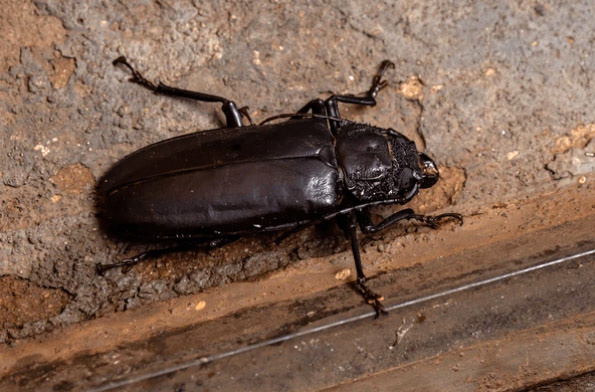
Mallodon spinibarbis is characterized by its robust body structure typical of prionine beetles. Adults typically measure 30-50 mm in length, though specimens can occasionally exceed this range. The body coloration is predominantly dark brown to blackish-brown, with a somewhat flattened appearance.
Key morphological features:
- Mandibles: Males possess notably enlarged, curved mandibles with distinctive spines along the inner margin, a characteristic reflected in the species epithet “spinibarbis” (meaning “spiny-bearded”)
- Antennae: Moderately long, typically reaching to the middle of the elytra or slightly beyond, with 11 segments
- Pronotum: Broad and flattened, with lateral margins bearing sharp spines or teeth
- Elytra: Elongate, covering the abdomen, with subtle longitudinal ridges
- Sexual dimorphism: Males exhibit significantly larger mandibles compared to females
Distribution an

Habitat
Mallodon spinibarbis is distributed across southern and central Europe, extending into parts of western Asia and North Africa. The species shows a preference for warm, Mediterranean climates but can also be found in temperate regions with suitable habitat conditions.
Habitat preferences:
- Deciduous and mixed forests
- Areas with mature trees, particularly oak (Quercus spp.), chestnut (Castanea sativa), and other broadleaf species
- Often associated with dead or declining trees in various stages of decomposition
Life Cycle and Biology
Like other Prioninae, Mallodon spinibarbis exhibits a prolonged larval development period, which is characteristic of wood-boring beetles.
Developmental stages:
Eggs: Females deposit eggs in crevices of bark, particularly on dead or weakened trees. Oviposition typically occurs during summer months.
Larvae: The larval stage is the longest phase of development, potentially lasting 3-5 years depending on environmental conditions and food quality. Larvae are elongate, cream-colored, and possess powerful mandibles adapted for boring through wood. They create extensive gallery systems within the sapwood and heartwood of host trees, feeding on the wood tissue and associated fungi.
Pupae: Pupation occurs within the larval galleries, typically in a chamber constructed near the wood surface. The pupal stage lasts several weeks.
Adults: Adult beetles emerge primarily during summer months (June-August). They are crepuscular to nocturnal and are attracted to lights. Adults are relatively short-lived, with their primary purpose being reproduction. They may feed on sap flows or fermenting fruit, though feeding is not essential for reproduction.
Subfamily Prioninae of the World I.
The Prionids of the World
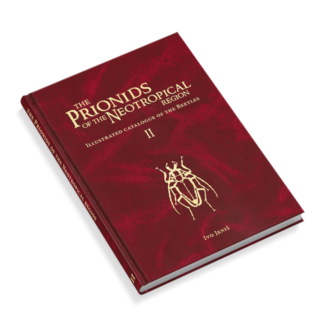
The Prionids of the Neotropical Region
The Prionids Collection Bundle
Ecological Role
Mallodon spinibarbis plays an important role in forest ecosystems as a saproxylic organism, contributing to the decomposition of dead wood and nutrient cycling. The extensive gallery systems created by larvae facilitate colonization by fungi and other decomposer organisms, accelerating wood decay processes.
Host plants: The species is polyphagous but shows preference for:
- Oak species (Quercus robur, Q. petraea, Q. cerris)
- Sweet chestnut (Castanea sativa)
- Beech (Fagus sylvatica)
- Various fruit trees
Conservation Status
Mallodon spinibarbis is not currently listed as threatened in most of its range, though local populations may be affected by habitat loss and the removal of dead wood from managed forests. The species serves as an indicator of forest health and the presence of suitable dead wood habitat.
Conservation considerations:
- Dependent on the availability of mature and dead standing trees
- May benefit from forest management practices that retain dead wood
- Sensitive to intensive forest management and sanitization practices
Cultural and Economic Significance
While not considered a significant pest of living trees, Mallodon spinibarbis larvae can occasionally infest structural timber or wood products if sourced from infested trees. However, damage is typically limited and the species is not economically significant.
The impressive size and distinctive mandibles of male specimens have made this species popular among beetle collectors, though collection pressure is not considered a significant threat to populations.
Research and Study
Mallodon spinibarbis has been the subject of various ecological and taxonomic studies, particularly regarding:
- Saproxylic beetle communities and biodiversity
- Wood decomposition processes
- Sexual dimorphism and mating behavior in Prioninae
- Biogeography and population genetics across the Mediterranean region
The species continues to be of interest for biodiversity surveys and as an indicator species for old-growth forest conditions and dead wood availability in European forest ecosystems.