Tiger Beetle Top Speed — The Insect That Outruns Its Own Eyes
At full sprint, the Australian tiger beetle Rivacindela hudsoni covers 2.5 metres every second — 125 times its own body length. Scale that to human size and the pace tops 770 km/h. But the record comes at a cost: the beetle runs itself blind.
Hero image — a tiger beetle sprinting across sun-baked salt crust in its natural habitat. Photograph to be added by the author.
Verified Speed Records: Who Holds the Title?
Two Australian species dominate every serious discussion of insect land speed. Rivacindela hudsoni, described by Sumlin in 1997 from salt lake margins in South Australia, was clocked at 9 km/h (5.6 mph) — equivalent to 125 body lengths per second for its 20.8 mm frame (Kamoun & Hogenhout, 1996). Its smaller relative Cicindela eburneola achieved 6.8 km/h, but because it measures only about 11 mm, this translates to a staggering 171 body lengths per second — the highest proportional ground speed ever documented for any running animal (Kamoun & Hogenhout, 1996).
To appreciate what these numbers mean: Usain Bolt’s world-record 100-metre dash translates to roughly 5.6 body lengths per second. A cheetah at full gallop reaches about 16. The common American Cicindela repanda, which inhabits stream banks across the eastern United States, manages a more modest 0.54 m/s — still 53 body lengths per second, ten times faster than Bolt in relative terms (Gilbert, 1997). The Guinness Book of World Records formally certifies R. hudsoni as the fastest insect on land.
Before the tiger beetle measurements, the title belonged to the American cockroach Periplaneta americana, recorded at 5.4 km/h (50 body lengths per second) at the University of California, Berkeley, in 1991. Tiger beetles shattered that benchmark by a wide margin.
The Anatomy of Superspeed
Tiger beetle legs are long, thin, and built for stride frequency rather than brute force. The femora of Rivacindela species are noticeably elongated relative to body mass compared with other cicindeline genera, and the tarsi carry fine setae that grip loose sandy substrates without sinking. The entire body plan — narrow pronotum, flattened elytra, a head wider than the thorax — reduces aerodynamic drag at ground level.
Being ectothermic, tiger beetles run faster as ambient temperatures climb. Rivacindela hudsoni inhabits salt flats near Lake Gairdner in South Australia, where midday surface temperatures regularly exceed 60 °C. The beetle’s elevated metabolic rate in this heat is partly responsible for its speed advantage over temperate-zone relatives. Its long legs also serve a thermoregulatory role: they lift the body above the scorching substrate, reducing conductive heat gain (Pearson & Vogler, 2001).
Another key adaptation is the loss of functional flight. R. hudsoni retains only vestigial wings fused beneath its elytra — a trait unusual among tiger beetles, most of which are strong fliers. Without flight as an option, every gram of metabolic investment has been redirected into running performance, and the beetle’s entire predatory strategy revolves around terrestrial pursuit.
Blinded by Speed: The Photon Problem
The most counterintuitive feature of tiger beetle locomotion is this: the faster the beetle runs, the less it can see. Cole Gilbert at Cornell University demonstrated in 1997 that at sprint velocities, the beetle’s photoreceptors simply cannot collect photons fast enough to assemble a visual image. The world dissolves into a featureless smear — functionally identical to what a nocturnal insect experiences in darkness, except the cause is motion rather than lack of light (Zurek & Gilbert, 2014).
The beetle’s solution is a stop-and-go pursuit strategy. It accelerates hard toward the last known position of its prey, runs blind for a few centimetres, then brakes abruptly. During the pause — lasting just milliseconds — its eyes re-acquire the target, and the next sprint begins. A typical chase involves three or four such cycles. The strategy works because the beetle’s raw speed compensates for the interruptions: even with mandatory rest stops, almost nothing on six legs can outrun it.
This stop-and-go pattern was long observed but never explained until Gilbert’s lab recorded the photoreceptor response times. The discovery reframed the beetle not as a flawed sprinter but as an organism that has pushed running performance beyond the design limits of its own sensory hardware — and evolved a behavioural workaround to match.
Want the full picture?
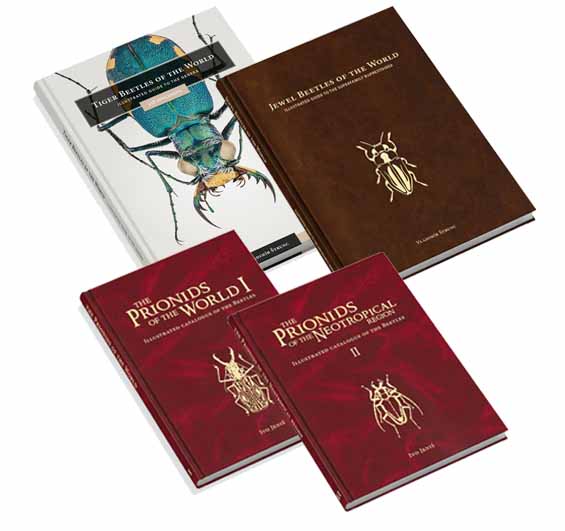
This article draws on speed data and ecological insights covered in depth in authoritative cicindelid literature. Explore verified measurements, hunting mechanics, and the full diversity of the world’s fastest running insects.
Antennae as Bumper Rails: Navigating Without Sight
If a sprinting tiger beetle cannot see its prey, it certainly cannot see rocks, sticks, or crevasses in its path. So how does it avoid running headfirst into obstacles? The answer came in 2014, when Daniel Zurek and Cole Gilbert published a landmark study on the hairy-necked tiger beetle Cicindela hirticollis (Zurek & Gilbert, 2014).
They found that while running, the beetle locks its antennae in a rigid forward V-shape, held approximately 1.5 mm above the ground. Unlike most insects, which wave their antennae to sample the environment, a sprinting tiger beetle never moves them. The tips serve as fixed mechanical sensors — collision detectors in the purest sense. When an antenna strikes an obstacle, the beetle pitches its body upward and skitters over it without slowing down.
The evidence was unambiguous. Beetles with painted-over eyes negotiated a laboratory hurdle just as efficiently as sighted beetles — proving that vision plays no role in obstacle avoidance at speed. But when the researchers clipped the antennae of sighted beetles, the insects crashed headlong into the same barrier. Eyes alone were not enough. The antennae are both necessary and sufficient for safe high-speed locomotion (Zurek & Gilbert, 2014).
This finding has direct implications for robotics. The first autonomous rover, Shakey, navigated with mechanical bump sensors. Modern rovers like NASA’s Curiosity rely on computationally expensive camera arrays. Tiger beetles suggest that a simpler, antenna-like solution might enable far faster autonomous movement in environments where optical processing is the bottleneck.
Speed Across the Family: Not All Tiger Beetles Are Equal
The family Cicindelidae — or subfamily Cicindelinae, depending on which authority you follow — contains approximately 2,600 described species and subspecies globally, with the greatest diversity in the Oriental and Neotropical regions (Pearson & Vogler, 2001). Running speed varies enormously across this radiation.
At the top sit the flightless Australian salt-lake specialists of the subgenus Rivacindela, with R. hudsoni as the undisputed champion. Temperate North American species such as Cicindela repanda and C. sexguttata run at 0.5–1.2 m/s — fast enough to be difficult to catch by hand, but well below the Australian extremes. Nocturnal genera like Omus, Amblycheila, and the massive African Manticora are comparatively slow runners that rely more on ambush and powerful mandibles than on chase speed.
What separates the speed demons from the ambushers is habitat. The fastest species occupy open, flat, sun-baked substrates — salt pans, sandy riverbanks, bare dune crests — where there is nothing to hide behind and thermal conditions favour maximum metabolic output. Woodland-path species like the six-spotted tiger beetle C. sexguttata are quick but not extreme; their environment rewards manoeuvrability and short bursts rather than sustained top-end velocity.
The Evolutionary Arms Race on Salt Flats
Why would any insect need to run 125 body lengths per second? The answer lies in the prey community of inland Australian salt lakes. The arthropods that share these barren habitats — small flies, springtails, spiders — are themselves under intense selection pressure to escape predation. In a landscape with no cover, speed is the only refuge.
Rivacindela hudsoni cannot fly. It cannot burrow quickly. Its only predatory option is to be faster than everything else on the surface. The arms race has apparently been running for a very long time: the oldest known fossil tiger beetle, Cretotetracha grandis from the Yixian Formation in Inner Mongolia, dates to the Early Cretaceous, approximately 125 million years ago (Zhao et al., 2019). Even this Mesozoic species shows the elongated legs and wide head characteristic of a visually guided pursuit predator.
The convergence between tiger beetle locomotion and mammalian pursuit predation is striking. Cheetahs, the fastest land mammals, also experience reduced sensory precision at top speed and rely on flexible-spine mechanics to maintain stride frequency. Both lineages have traded robustness for velocity — and both pay a metabolic price that limits sprint duration to short bursts.
Tiger Beetles as Bioindicators: Why Speed Matters Ecologically
Tiger beetles are among the most widely used insect bioindicators in conservation ecology. Their habitat specificity — many species occupy a single substrate type within a narrow climatic envelope — makes them sensitive markers of environmental change. A thriving tiger beetle population signals intact open habitat with minimal disturbance; their disappearance from a known site can point to soil compaction, vegetation encroachment, or hydrological change (Pearson & Vogler, 2001).
Several species are conservation priorities. The Salt Creek tiger beetle (Cicindela nevadica lincolniana), restricted to saline wetlands in Lancaster County, Nebraska, is one of the rarest insects in North America. The puritan tiger beetle (Cicindela puritana), once common along the Connecticut River, survives in only a handful of sand-bar colonies. In both cases, habitat loss — not collecting — is the primary threat.
Their speed, paradoxically, makes them easy to survey. A walking entomologist flushes tiger beetles from the path; the insects fly or sprint a metre or two ahead and land in plain view. Repeat this along a transect and you have a quantitative density estimate with minimal equipment. Few other insect groups are so cooperative.
What You Can See in the Field
You do not need to travel to an Australian salt lake to witness tiger beetle speed first-hand. In Europe, Cicindela campestris (the green tiger beetle) sprints along sandy paths from April to September. In North America, C. sexguttata — an iridescent green species roughly 12 mm long — is one of the first beetles active in spring, darting along woodland trails on warm afternoons.
Watch for the characteristic flight-and-land pattern: as you approach, the beetle lifts off, flies two or three metres forward, and alights facing you. Step closer and it repeats the manoeuvre — always maintaining a fixed distance, always facing the potential threat. On very hot surfaces, many species raise their bodies on fully extended legs, a behaviour called stilting, to reduce contact with the scorching ground.
If you want to observe the stop-and-go hunting sequence, sit still near a sandy patch and watch for a beetle chasing a small ant or fly. The bursts are fast enough that without prior knowledge, you might assume the beetle reached its prey in one smooth dash. A slow-motion video reveals the truth: short explosive sprints separated by near-instantaneous pauses, the beetle’s head pivoting fractionally at each stop to re-acquire the target.
Frequently Asked Questions
What is the top speed of a tiger beetle?
The fastest recorded tiger beetle is Rivacindela hudsoni from South Australia, clocked at 9 km/h (2.5 m/s), equivalent to 125 body lengths per second (Kamoun & Hogenhout, 1996). In proportional terms, the smaller Cicindela eburneola reaches 171 body lengths per second at 6.8 km/h — the highest relative ground speed for any running animal.
Why do tiger beetles go blind when they run?
At sprint speed, a tiger beetle’s compound eyes cannot collect enough photons to form a coherent image — a phenomenon called motion blur. The visual system becomes photon-limited in a way similar to nocturnal insects in darkness, except the cause is motion rather than lack of light. The beetle compensates with a stop-and-go hunting strategy: it brakes for just milliseconds, re-acquires its prey visually, then sprints again (Gilbert, 1997).
How do tiger beetles avoid obstacles if they cannot see while running?
They hold their antennae rigidly in a forward V-shape, approximately 1.5 mm above the ground. When an antenna contacts an obstacle, the beetle pitches its body upward to clear it without slowing down. In laboratory experiments, beetles with painted-over eyes navigated hurdles just as well as sighted beetles — but sighted beetles with clipped antennae crashed headlong into the same barriers. The antennae are both necessary and sufficient for safe high-speed running (Zurek & Gilbert, 2014).
Are tiger beetles dangerous to humans?
Tiger beetles are harmless to people. Their mandibles, while large and powerful relative to body size, are built for seizing small arthropod prey — ants, flies, and springtails. They do not bite defensively in most handling situations and carry no venom or medically significant pathogens.
What do tiger beetles eat?
Adults are generalist predators that chase and consume ants, flies, small beetles, caterpillars, springtails, and spiders. They are active visual hunters that run down prey in the open. Larvae take the opposite approach: they are ambush predators that wait at the entrance of vertical soil burrows and snatch passing invertebrates with sickle-shaped mandibles (Pearson & Vogler, 2001).
How do tiger beetle larvae hunt?
The larva excavates a vertical cylindrical burrow — sometimes up to one metre deep — and positions its large, flattened head flush with the soil surface. When a small arthropod walks close enough, the larva lunges upward, seizes the prey with its mandibles, and drags it underground. A pair of dorsal hooks on the fifth abdominal segment anchor the larva inside the shaft so struggling prey cannot pull it out. This ambush strategy stands in stark contrast to the adults’ high-speed pursuit.
How many species of tiger beetles exist?
Approximately 2,600 species and subspecies of tiger beetles have been described worldwide. The greatest diversity occurs in the Oriental (Indo-Malayan) region, followed by the Neotropics. North America alone hosts around 120 species. Their taxonomy remains contentious — some authorities treat them as the family Cicindelidae, while others classify them as the subfamily Cicindelinae within the ground beetle family Carabidae (Pearson & Vogler, 2001).
How can I tell a tiger beetle from a ground beetle?
Tiger beetles typically have much larger, more prominent eyes than ground beetles, longer and thinner legs adapted for rapid running, and sickle-shaped mandibles visible from above. Most diurnal species are brightly metallic — green, blue, copper, or iridescent — and many display distinctive cream or white elytral markings. Ground beetles tend to be darker, more heavily built, and slower-moving. In the field, the most reliable cue is behaviour: tiger beetles sprint or fly ahead of you along paths, while most ground beetles scuttle for cover.
Are any tiger beetles endangered?
Yes. Several species with highly restricted habitats are conservation priorities. The Salt Creek tiger beetle (Cicindela nevadica lincolniana) in Nebraska and the puritan tiger beetle (Cicindela puritana) along the Connecticut River are among the rarest insects in North America. Habitat loss from development, altered hydrology, and vegetation encroachment are the primary threats — not collecting.
What is the oldest known fossil tiger beetle?
The oldest described fossil tiger beetle is Cretotetracha grandis from the Yixian Formation in Inner Mongolia, China, dating to approximately 125 million years ago in the Early Cretaceous. It already shows the elongated legs, wide head, and sickle-shaped mandibles characteristic of a visually guided pursuit predator. For a comprehensive treatment of tiger beetle evolution and diversity, consult Tiger Beetles: The Evolution, Ecology, and Diversity of the Cicindelids by Pearson & Vogler (2001).
Further Reading
- Kamoun, S. & Hogenhout, S.A., 1996. Flightlessness and rapid terrestrial locomotion in tiger beetles of the Cicindela L. subgenus Rivacindela van Nidek from saline habitats of Australia (Coleoptera: Cicindelidae). The Coleopterists’ Bulletin, 50(3): 221–230.
- Gilbert, C., 1997. Visual control of cursorial prey pursuit by tiger beetles (Cicindelidae). Journal of Comparative Physiology A, 181(3): 217–230.
- Zurek, D.B. & Gilbert, C., 2014. Static antennae act as locomotory guides that compensate for visual motion blur in a diurnal, keen-eyed predator. Proceedings of the Royal Society B, 281(1779): 20133072.
- Zurek, D.B., Perkins, M.Q. & Gilbert, C., 2014. Dynamic visual cues induce jaw opening and closing by tiger beetles during pursuit of prey. Biology Letters, 10(11): 20140760.
- Pearson, D.L. & Vogler, A.P., 2001. Tiger Beetles: The Evolution, Ecology, and Diversity of the Cicindelids. Cornell University Press, Ithaca, NY, 333 pp.
- Nachtigall, W., 1996. Take-off and flight behaviour of the tiger-beetle species Cicindela hybrida in a hot environment (Coleoptera: Cicindelidae). Entomologia Generalis, 20(4): 249–262.
- Sumlin, W.D. III, 1997. Studies on the Australian Cicindelidae XII. Additions to Megacephala, Nickerlea and Cicindela with notes (Coleoptera). Cicindelidae: Bulletin of Worldwide Research, 4(4): 1–56.
Complete bibliography
Every reference cited in this article is documented in full within Pearson & Vogler’s comprehensive treatment. Streamline your research with the complete bibliography and taxonomic index.