Genus Enantiola
(Cicindelidae)
Systematics
The Ultimate Visual Guide to Tiger Beetles
The genus Enantiola was established by Rivalier in 1961 as part of his comprehensive revision of the genus Cicindela Linnaeus, 1758. This taxonomic work, entitled “Démembrement du genre Cicindela L. (Suite) (1). IV. Faune indomalaise,” was published in Revue Française d’Entomologie, volume 28(3), pages 121-149.
Taxonomic hierarchy:
Order: Coleoptera
Suborder: Adephaga
Family: Cicindelidae
Tribe: Cicindelini



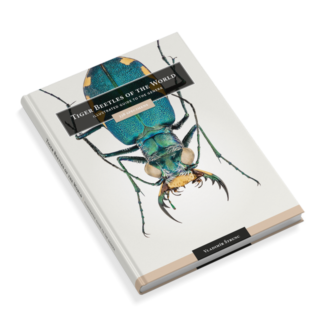
Enantiola belongs to the family Cicindelidae, commonly known as tiger beetles, which has recently been validated as a distinct family sister to Carabidae. The genus is classified within the tribe Cicindelini Latreille, 1802, one of the major groupings of tiger beetles worldwide.
The type species and complete species composition of the genus require further investigation, though at least one confirmed species is Enantiola hewittii (Horn, 1908), originally described as belonging to a different genus and later transferred to Enantiola.
Bionomics – Mode of Life
As members of the family Cicindelidae, Enantiola species are presumably predatory beetles, both as adults and larvae. Tiger beetles are generally characterized by their active hunting behavior, swift running capabilities, and visual acuity. Adults typically hunt small arthropods on the ground surface, while larvae live in vertical burrows where they ambush passing prey.
The adults likely possess the characteristic features of tiger beetles: large bulging eyes, long legs adapted for rapid movement, and large curved mandibles for capturing prey. The larvae presumably construct burrows in suitable substrate and wait at the burrow entrance to capture passing invertebrates.
Distribution
Based on the original description by Rivalier (1961) focusing on the “Faune indomalaise” (Indomalayan fauna), the genus Enantiola is associated with the Indomalayan biogeographic realm. This region extends across South and Southeast Asia, including the Indian subcontinent, mainland Southeast Asia, and the western portions of the Malay Archipelago.
Confirmed distributional records include:
Enantiola hewittii has been recorded from the Malaysian Peninsula (specifically Malacca), representing a new record for this region documented by Wiesner in 2019. The distribution appears to be restricted to the tropical zones of the Malay Peninsula, Sumatra, Java, and Borneo region, though comprehensive distributional data remain incomplete.
Preferred Habitats
Given the general ecology of Indomalayan tiger beetles and the known distribution of E. hewittii in the Malaysian Peninsula, species of this genus likely inhabit tropical forest environments or forest-edge habitats characteristic of the Indomalayan region. Many Indomalayan cicindelids are associated with riverbanks, sandy areas near water bodies, or open patches within forested regions.
The genus may be associated with lowland tropical rainforests, though specific microhabitat preferences (such as substrate type, canopy cover, or proximity to water) remain undocumented for Enantiola species.
Scientific Literature Citing the Genus
Article prepared based on available scientific literature as of February 2026. Information is limited due to the scarcity of published research specifically addressing the genus Enantiola.