Tiger Beetles of the Orient
A Geographical Guide to the Family Cicindelidae
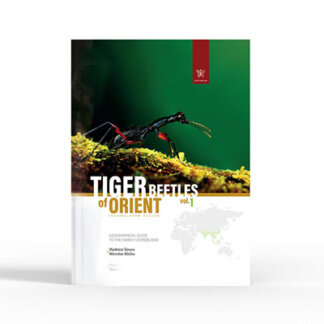
Tiger Beetles of the Orient is a comprehensive geographical and taxonomic guide dedicated to the family Cicindelidae within the Oriental biogeographical region, one of the most diverse and evolutionarily complex areas for tiger beetles worldwide. This authoritative volume introduces 39 genera and approximately 270 species and subspecies, providing a structured and visually rich overview of Oriental cicindelid diversity.
NEWS: world-tiger-beetles.com
Authored by Vladimír Štrunc and co-written with renowned Cicindelidae specialist Miroslav Klícha, the book continues a specialized series of regional monographs devoted to tiger beetles, complementing earlier global and Afrotropical volumes and establishing a coherent, zoo-geographically organized reference framework for the family.


Scientific and Taxonomic Framework
The systematic arrangement of taxa follows current cicindelid classifications consistent with contemporary expert consensus, ensuring compatibility with modern faunistic, taxonomic, and biogeographical research. The book provides complete species lists for the Oriental region, forming a reliable taxonomic baseline for both professional and advanced amateur users.
By adopting a genus- and subgenus-oriented structure, the guide allows readers to recognize diagnostic morphological patterns, evolutionary relationships, and regional specializations that define Oriental tiger beetle lineages.
The Oriental Region and Its Cicindelid Diversity
The Oriental region encompasses South and Southeast Asia, including the Indian subcontinent, Indochina, the Sunda Islands, southern China, and adjacent archipelagos. This region is characterized by extraordinary habitat diversity—tropical rainforests, monsoon forests, riverine systems, coastal zones, and montane environments—which has driven extensive diversification within Cicindelidae.
Oriental tiger beetles display a remarkable range of:
-
body sizes and proportions,
-
metallic and structural coloration,
-
habitat specialization, from forest leaf litter to open riverbanks and coastal sands,
-
behavioral and ecological adaptations.
As a result, the region represents a critical area for understanding cicindelid evolution, endemism, and biogeographical transitions between the Palearctic and Australasian realms.
Genera Covered
The guide documents representative species from all recognized genera of Oriental Cicindelidae, including but not limited to:
Abroscelis, Apteroessa, Callytron, Calochroa, Calomera, Cicindela, Collyris, Cosmodela, Cylindera, Derocrania, Dilatotarsa, Glomera, Guineica, Heptodonta, Hipparidium, Hypaetha, Jansenia, Leptognatha, Lophyra, Myriochila, Naviauxella, Neocollyris, Notospira, Oxygoniola, Polyrhanis, Probstia, Pronyssa, Prothyma, Protocollyris, Rhytidophaena, Salpingophora, Sophiodela, Therates, Thopeutica, Tricondyla, Wallacedela, and others.
This breadth ensures that the guide functions as a comprehensive visual and taxonomic survey of Oriental tiger beetles.
Tiger Beetles of the World
Tiger Beetles of Africa
Tiger Beetles of Orient
The Tiger Beetles Bundle
Illustrated Identification and Visual Excellence
A defining strength of Tiger Beetles of the Orient is its unique pictorial atlas format, optimized for accurate species recognition and comparative study. One or more representative species of each genus and subgenus are illustrated using ultra-high-resolution dorsal (top-view) close-ups, capturing minute morphological details essential for identification.
Each illustrated species entry includes:
-
sex of the specimen,
-
body size,
-
precise place of origin,
-
country-level distribution maps.
The images are printed using UV inks on glossy chalk paper, producing exceptional color depth, contrast, and sharpness that faithfully render metallic reflections and fine surface sculpturing. Several species illustrated in this volume have never been published previously, making the book a significant contribution to the visual documentation of Cicindelidae.
Editorial Balance and Intended Use
While the publication places strong emphasis on imagery—an editorial decision that prioritizes identification and comparative morphology—it is supported by concise, accurate taxonomic and distributional data. This balance makes the book particularly well suited for:
-
museum and private collections,
-
field and collection-based identification,
-
photographic and educational reference,
-
faunistic and biogeographical studies.
The book has received a top editorial rating (5/5), with strengths noted in its completeness, image quality, and production standards. The higher price point reflects the premium materials and specialist content but remains appropriate for a reference work of this caliber.
Production Quality and Physical Format
Tiger Beetles of the Orient is produced as a durable, high-quality volume featuring:
-
hardcover binding,
-
heavyweight paper (170 g/m²),
-
optimized photographic reproduction,
-
secure shipping to ensure safe delivery.
These production choices ensure longevity and usability in professional libraries and long-term collections.
Scientific and Cultural Significance
Tiger beetles are among the most captivating predatory insects, renowned for their aggressive hunting behavior, extraordinary running speed, and acute visual perception. Their striking appearance and ecological specialization make them a focal group for entomologists, photographers, and nature observers alike.
By documenting the diversity of Oriental Cicindelidae in such detail, this guide invites readers to explore one of the most fascinating predatory radiations in the insect world and deepens understanding of tropical biodiversity.
Audience and Value
This volume serves as:
-
an illustrated identification manual,
-
a regional taxonomic synthesis,
-
a visual archive of rare and endemic species,
-
a valuable research tool for professional and amateur entomologists alike.
Together with the preceding volumes in the series, Tiger Beetles of the Orient forms an essential component of a growing global reference on the family Cicindelidae, bridging taxonomy, biogeography, and visual documentation at the highest level.