Tiger Beetles of the World – An Illustrated Guide to the Genera (Cicindelidae)
Tiger Beetles of the World is a comprehensive and visually authoritative guide to one of the most charismatic and scientifically significant groups of predatory beetles: the family Cicindelidae. This volume provides an in-depth overview of global tiger beetle diversity, presenting approximately 125 genera and 338 species, structured in accordance with the modern taxonomic framework established by Jürgen Wiesner, one of the leading authorities on Cicindelidae systematics.
NEWS: world-tiger-beetles.com
Produced in close collaboration with international specialists, the book represents a synthesis of taxonomic rigor, high-resolution imagery, and practical identification utility. It is designed to serve as a core reference for professional entomologists, advanced amateurs, naturalists, conservation biologists, and serious insect photographers.


Scientific Scope and Taxonomic Framework
Tiger beetles (Coleoptera: Cicindelidae) form a distinct lineage of highly specialized predatory beetles, renowned for their exceptional speed, acute vision, and powerful sickle-shaped mandibles. Occupying a wide range of open habitats—including riverbanks, sand dunes, forest paths, salt flats, and grasslands—cicindelids are globally distributed, with peak diversity in tropical and subtropical regions.
This guide adopts a genus-level and representative species approach, allowing readers to understand both the breadth of global diversity and the defining morphological characters of each major lineage. Taxa are organized according to tribal and generic relationships, reflecting current systematic knowledge and providing a coherent framework for comparative identification.
Illustrated Identification and Morphological Detail
A central strength of Tiger Beetles of the World lies in its exceptional visual documentation. Each tribe is represented by one or more carefully selected species, illustrated using large-format, high-resolution photographs that emphasize diagnostic characters critical for accurate identification.
Species accounts are accompanied by:
-
scientific name and taxonomic placement,
-
sex of the illustrated specimen,
-
body size measurements,
-
precise locality data,
-
country-level distribution ranges.
To facilitate morphological comparison, specimens are depicted in multiple standardized views:
-
dorsal (top) view for overall habitus,
-
lateral (side) view for body proportions,
-
detailed close-ups highlighting mandibles, pronotum, and scutellum.
To further illustrate intraspecific and interspecific variability, the guide includes additional specimens shown in classic dorsal view, as well as rare museum specimens that are seldom accessible to the broader scientific community.
Notably, several species illustrated in this volume have never before been published in photographic form, making the book an important contribution to the visual documentation of global cicindelid diversity.
Tiger Beetles of the World
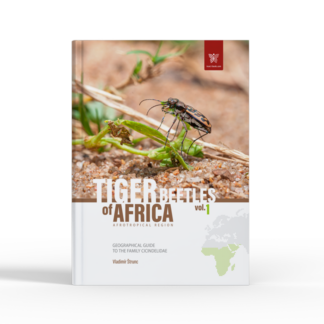
Tiger Beetles of Africa
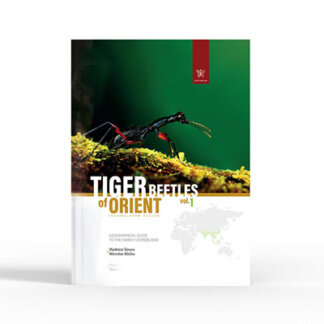
Tiger Beetles of Orient
The Tiger Beetles Bundle
Global Relevance and Biogeographical Insight
By assembling taxa from all major zoogeographical regions, the book offers valuable insight into global patterns of tiger beetle diversity and distribution. Cicindelidae are widely recognized as bioindicators of habitat quality, particularly in open and dynamic ecosystems, and their presence or absence often reflects environmental stability, soil conditions, and land-use intensity.
As such, the guide is not only a tool for identification but also a resource relevant to:
-
biodiversity research,
-
ecological monitoring,
-
conservation planning,
-
protected species assessment.
Production Quality and Practical Value
Beyond its scientific content, Tiger Beetles of the World is distinguished by its high production standards:
-
durable hardcover binding,
-
heavyweight, high-quality paper optimized for photographic reproduction,
-
excellent color fidelity and image sharpness,
-
secure packaging designed to protect the volume during shipping.
These features ensure longevity and usability in both private collections and institutional libraries.
Intended Audience and Use
This illustrated guide functions as:
-
an identification reference for both field and collection-based work,
-
a comparative overview of cicindelid genera for taxonomic study,
-
an educational resource for advanced students and educators,
-
a visual archive of rare and significant species.
Thanks to its topicality, taxonomic breadth, and visual clarity, the book is equally valuable to professional researchers, dedicated amateurs, and scientists working in entomology, ecology, and conservation biology.