Genus Derocrania Chaudoir, 1860
(Coleoptera: Cicindelidae)
An Overview of Arboreal Tiger Beetles from the Indian Subcontinent
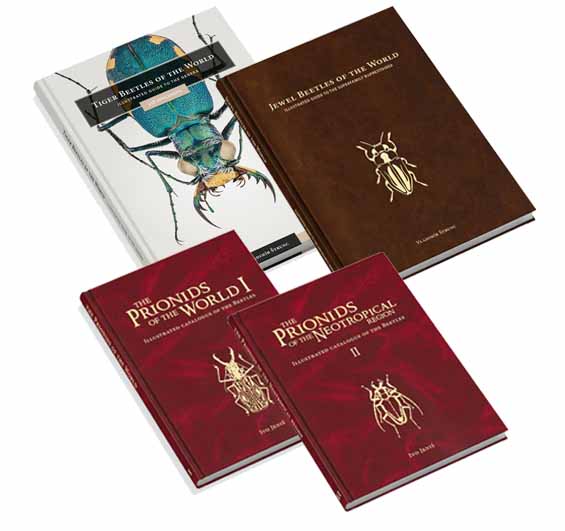
The Ultimate Visual Guide to Tiger Beetles
Genus Derocrania Chaudoir, 1860
Systematics
Taxonomic hierarchy:
Order: Coleoptera
Suborder: Adephaga
Family: Cicindelidae
Tribe: Cicindelini




The genus Derocrania was established by Chaudoir in 1860 and belongs to the family Cicindelidae, commonly known as tiger beetles. Within the broader classification, Derocrania is placed in the tribe Collyridini, a group characterized by arboreal habits and distinctive morphological adaptations for life in trees.
According to the comprehensive revision by Naviaux in 2002, the genus Derocrania is divided into two subgenera based on morphological characteristics, particularly the shape of the vertex and occiput:
Subgenus Derocrania sensu stricto
This nominal subgenus comprises five species with characteristic morphological features that distinguish them from their sister subgenus.
Subgenus Neoderocrania Naviaux, 2002
This subgenus contains eleven species, bringing the total number of recognized species in the genus to sixteen.
The most thoroughly studied species include Derocrania scitiscabra (Walker, 1859), D. concinna Chaudoir, D. schaumi, D. nietneri, and D. obscuripes. Recent surveys in Sri Lanka have documented that twelve of the sixteen species are endemic to the island, representing a remarkable level of endemism that underscores the evolutionary significance of this genus.
The genus Derocrania is closely related to Tricondyla Latreille, another genus of arboreal tiger beetles, and both groups share the distinctive feature of fused elytra. However, Derocrania can be distinguished by specific morphological characters of the head, pronotum, and male copulatory organs.
Bionomics – Mode of Life
Arboreal Lifestyle
Derocrania species are strictly arboreal, meaning they live exclusively on trees and woody vegetation. Unlike many tiger beetles that are ground-dwelling (terrestrial), these beetles have adapted to a life among branches and tree trunks, where they actively hunt for prey.
Morphological Adaptations
One of the most distinctive features of Derocrania beetles is their fused elytra (wing covers). The elytra are completely sealed along the midline, and the beetles lack functional hind wings beneath them. This morphological adaptation renders all Derocrania species completely flightless. While the inability to fly may seem disadvantageous, it is actually a specialized adaptation to their arboreal lifestyle, where flight is less critical than in open habitats. The fused elytra provide enhanced protection against predators and environmental stresses.
Predatory Behavior
Like all tiger beetles, Derocrania species are active predators. Adults hunt various small invertebrates on tree trunks and branches, including ants, flies, small spiders, and other soft-bodied arthropods. Recent studies have revealed that D. scitiscabra shows preference for live prey over carrion, demonstrating typical tiger beetle hunting behavior. Laboratory experiments have shown that this species can successfully prey upon different larval stages of agricultural pests, suggesting potential as biological control agents.
Activity Patterns
Derocrania species are primarily diurnal (day-active) hunters, utilizing their excellent vision to locate prey on tree surfaces. They are particularly active during warm, sunny conditions when their prey is also most active.
Life Cycle
While detailed studies of the complete life cycle of Derocrania species remain limited, they are known to undergo complete metamorphosis like all beetles, with egg, larval, pupal, and adult stages. The larval stages of related arboreal tiger beetles develop in concealed locations such as tree bark crevices or hollow plant stems, where they adopt an ambush predation strategy.
Distribution
Geographic Range
The genus Derocrania exhibits a restricted distribution limited to the Indian subcontinent. The beetles are found in two main regions:
India: Derocrania species occur in southern India, though specific distributional data for individual species within the Indian mainland remains incomplete in the scientific literature.
Sri Lanka: Sri Lanka represents the center of diversity for the genus, with twelve endemic species documented across all climatic zones of the island. Recent surveys have recorded Derocrania species from the Central Province, North-Central Province, Eastern Province, Uva Province, Sabaragamuwa Province, and other regions spanning wet, dry, and intermediate climatic zones.
Endemism and Biogeography
The high degree of endemism in Sri Lanka (twelve out of sixteen species) suggests that Derocrania has undergone significant evolutionary radiation on the island. This pattern of endemism is consistent with Sri Lanka’s geological history and its role as a biodiversity hotspot for numerous taxa.
The most widespread species, Derocrania scitiscabra, has been recorded from multiple provinces across Sri Lanka and represents the most common and widely distributed member of the genus. Historical records dating back to 1860 indicate that this species has maintained a consistent presence across the island, though its habitat preferences have shifted over time to include agricultural landscapes.
Preferred Habitats
Natural Habitats
Historically, Derocrania species were primarily associated with natural forest environments. They inhabit various forest types including tropical moist forests, dry forests, and transitional zones. Within these forests, the beetles occupy tree trunks, branches, and woody vegetation where they hunt for prey.
Agricultural Landscapes
Recent extensive surveys have revealed a remarkable adaptation of Derocrania species to agricultural habitats. The beetles have been documented thriving in various crop cultivation systems, including:
- Coconut plantations (the most frequently occupied agricultural habitat)
- Tea estates
- Fruit farms
- Betel leaf cultivations
- Cinnamon plantations
- Pepper gardens
Derocrania scitiscabra has proven particularly successful in agricultural settings, where it is now the dominant arboreal tiger beetle species. The beetles utilize tree trunks of crop plants as hunting grounds, occupying similar ecological niches to those they filled in natural forests.
Microhabitat Preferences
Derocrania beetles are typically found on the trunks and larger branches of trees, particularly in areas with rough bark that provides suitable hunting grounds for their invertebrate prey. They tend to occur at heights ranging from ground level up to several meters, though systematic studies of vertical stratification remain limited.
Conservation Implications
The ability of Derocrania species to adapt to agricultural landscapes is significant from a conservation perspective. While many endemic species are threatened by habitat conversion, these beetles demonstrate resilience by successfully colonizing modified environments. However, this adaptability should not diminish concerns about the preservation of natural forest habitats, which likely harbor additional Derocrania species and support greater overall biodiversity.
Scientific Literature Citing the Genus
The following key publications have significantly advanced our understanding of Derocrania:
Conclusions and Future Research Directions
The genus Derocrania represents a fascinating group of arboreal tiger beetles with significant ecological, evolutionary, and potentially applied importance. The high endemism in Sri Lanka, combined with successful adaptation to agricultural landscapes, makes these beetles valuable indicators of both biodiversity and ecosystem function.
Future research should focus on:
- Complete life cycle studies, particularly larval biology and development
- Detailed phylogenetic analysis to understand evolutionary relationships within the genus
- Comprehensive surveys in India to document mainland diversity and distribution
- Ecological studies on predator-prey relationships and ecosystem services
- Assessment of conservation status for endemic species
- Investigation of potential as biological control agents in agriculture
As tropical forests continue to face pressures from development and climate change, understanding the ecology and conservation needs of endemic taxa like Derocrania becomes increasingly critical for maintaining biodiversity in the Indian subcontinent.
This article synthesizes current scientific knowledge about genus Derocrania for popular science communication. Information is based on peer-reviewed scientific literature published through 2024.