Genus Bostrichophorus Thomson, 1856
An African Tiger Beetle Genus (Coleoptera: Cicindelidae)
The Ultimate Visual Guide to Tiger Beetles
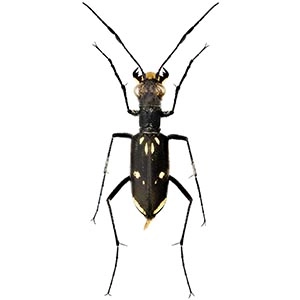
The genus Bostrichophorus Thomson, 1856 represents a distinctive lineage within the family Cicindelidae, the tiger beetles, endemic to the African continent. As members of this renowned family of predatory beetles, species of Bostrichophorus exemplify the characteristic adaptations that have made tiger beetles subjects of fascination among entomologists and naturalists worldwide. These beetles are swift hunters, possessing the remarkable visual acuity and running speed that define their family.


Tiger beetles have long captivated researchers due to their ecological importance as bioindicators, their sophisticated hunting behaviors, and their often spectacular metallic coloration. The African continent hosts an exceptional diversity of tiger beetle genera, with approximately 34 genera documented from sub-Saharan Africa alone. Within this rich assemblage, Bostrichophorus occupies a unique taxonomic position, contributing to the remarkable biodiversity of the Afrotropical region.
Systematics
The genus Bostrichophorus was established by Thomson in 1856 as part of the broader diversification of tiger beetle taxonomy in the mid-19th century. This period saw numerous descriptions of African cicindelid taxa as European entomologists and explorers documented the continent’s remarkable beetle fauna.
Taxonomic Classification:
Kingdom: Animalia
Phylum: Arthropoda
Class: Insecta
Order: Coleoptera
Suborder: Adephaga
Family: Cicindelidae Latreille
Subfamily: Cicindelinae
Tribe: Cicindelini Latreille
Genus: Bostrichophorus Thomson, 1856
The family Cicindelidae has undergone significant taxonomic revision in recent decades. Historically treated as either an independent family or as the subfamily Cicindelinae within Carabidae (ground beetles), growing evidence since 2020 supports their treatment as a distinct family sister to the Carabidae. This family-level status reflects both molecular phylogenetic analyses and the unique morphological and ecological characteristics that distinguish tiger beetles from other adephagan beetles.
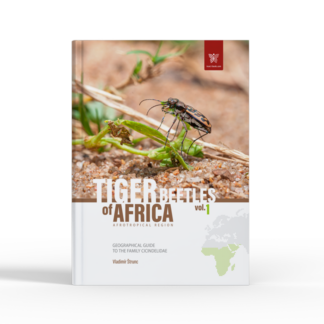
Within the comprehensive treatment of African tiger beetles, Bostrichophorus is recognized as one of the 34 genera documented from sub-Saharan Africa. The genus is featured in Werner’s authoritative two-volume monograph “The Tiger Beetles of Africa” (2000), which represents the most comprehensive systematic treatment of the continent’s cicindelid fauna. Werner’s work documents 396 species across these genera, providing distribution maps, habitat photographs, and detailed taxonomic information for the entire assemblage.
The genus Bostrichophorus appears in Volume II of Werner’s monograph, which treats twenty-four genera including Bennigsenium, Dromicoida, Trichodela, Epitrichodes, Bostrichophorus, Elliptica, and numerous others. This placement reflects systematic relationships within the African cicindelid radiation and situates Bostrichophorus within the broader context of continental tiger beetle diversity.
Bionomics – Mode of Life
As members of the Cicindelidae, species within the genus Bostrichophorus are obligate predators throughout their life cycle, exhibiting the sophisticated hunting strategies characteristic of tiger beetles. Understanding their bionomics requires consideration of both the general life history patterns shared across Cicindelidae and any genus-specific adaptations.
Life Cycle and Development: Tiger beetles undergo complete metamorphosis (holometaboly) with four distinct developmental stages: egg, larva, pupa, and adult. The life cycle typically spans one to two years, depending on species and environmental conditions. Female beetles deposit eggs individually in carefully selected substrate, usually in areas with appropriate soil composition for subsequent larval development.
Larval Stage: Tiger beetle larvae are among the most distinctive of all beetle larvae, highly specialized for their unique mode of predation. The larval stage represents the longest phase of the life cycle, often lasting many months to over a year. Larvae construct vertical burrows in suitable substrate, with burrow depth varying by species and larval instar, but potentially reaching depths of up to one meter in some tiger beetle species.
Adult Stage: Adult tiger beetles are among the most visually striking of all insects, typically featuring metallic coloration, elongated body form, large bulging compound eyes, long slender legs, and prominent curved mandibles. These morphological features reflect their lifestyle as active, diurnal hunters in open habitats.
Hunting Behavior: Adult tiger beetles employ a characteristic pursuit hunting strategy unique among insects. They are among the fastest-running terrestrial arthropods, with some species capable of speeds exceeding 2.5 meters per second. Their hunting behavior demonstrates a remarkable peculiarity: they run so fast that their visual system cannot process images during full-speed pursuit. Consequently, they hunt using a distinctive pattern of rapid sprints interspersed with brief pauses to visually relocate prey. During running, they hold their antennae rigidly forward to mechanically sense obstacles.
Predatory Ecology: Both larval and adult stages are opportunistic predators, consuming a wide variety of small arthropods including other insects, spiders, and various invertebrates. The adults’ large compound eyes provide exceptional visual acuity, enabling precise distance estimation using prey elevation in their visual field. Many species have evolved specialized visual adaptations for hunting in open, flat habitats, including high-acuity horizontal streaks in the eye that correspond to the horizon.
Defensive Mechanisms: Tiger beetles employ multiple defensive strategies. Their metallic coloration may serve both aposematic and cryptic functions depending on habitat. Adults are capable of rapid flight when disturbed, typically flying short distances before resuming terrestrial activity. Many species produce defensive chemicals, including benzaldehyde, secreted from pygidial glands when threatened.
Distribution
The genus Bostrichophorus is endemic to Africa, forming part of the rich Afrotropical tiger beetle fauna. The African continent, particularly sub-Saharan Africa, supports exceptional cicindelid diversity with 34 documented genera, making it one of the world’s most important regions for tiger beetle biodiversity.
Continental Context: The Afrotropical region’s tiger beetle fauna reflects millions of years of evolution in diverse habitats ranging from tropical rainforests to extreme deserts. Sub-Saharan Africa, excluding Madagascar and other islands, hosts approximately 396 described tiger beetle species. This remarkable diversity is distributed unevenly across the continent, with certain areas serving as centers of endemism and species richness.
Regional Distribution Patterns: African tiger beetles show clear biogeographic patterns related to habitat types and climatic zones. The distribution of genera like Bostrichophorus reflects both historical biogeographic processes and contemporary ecological requirements. Many African tiger beetle genera show restricted distributions corresponding to particular vegetation zones or soil types, contributing to high levels of local endemism.
Habitat-Related Distribution: The distribution of Bostrichophorus and other African tiger beetle genera is intimately linked with habitat availability. Tiger beetles are highly habitat-specific, with individual species often restricted to particular soil types, vegetation structures, or hydrological conditions. This specialization has led to the evolution of numerous narrowly distributed species and has important implications for conservation.
Conservation Biogeography: Understanding the distribution of African tiger beetle genera is crucial for conservation planning. Many species have restricted ranges and specific habitat requirements, making them vulnerable to habitat loss and environmental change. The documentation of genera like Bostrichophorus in comprehensive faunal treatments provides essential baseline data for monitoring biodiversity and assessing conservation priorities.
Preferred Habitats
Tiger beetles of the genus Bostrichophorus, as part of the diverse African cicindelid fauna, occupy habitats characteristic of the continent’s varied landscapes. Understanding their habitat preferences requires consideration of the ecological patterns observed across African tiger beetle assemblages.
Open Habitat Specialists: Tiger beetles are predominantly inhabitants of open habitats where their hunting strategy of visual pursuit can be effectively employed. Across Africa, tiger beetles occupy a diverse array of such habitats including sandy river banks, lakeshores, coastal areas, exposed mudflats, woodland paths, grassland clearings, and semi-arid savannas. The specific habitat preferences of individual genera and species reflect evolutionary adaptations to particular microenvironmental conditions.
Savanna Ecosystems: Sub-Saharan Africa’s extensive savanna ecosystems support rich tiger beetle assemblages. These habitats, characterized by grassland with scattered trees and shrubs, provide the open ground and appropriate substrates required by many tiger beetle species. Savanna tiger beetles often show seasonal activity patterns corresponding to wet and dry seasons, with adult activity concentrated during or immediately following rainfall periods when prey abundance is high and soil conditions are optimal.
Microhabitat Requirements: Tiger beetle habitat selection operates at multiple spatial scales. At the landscape scale, factors such as vegetation type and hydrological regime determine broad distribution patterns. At the microhabitat scale, specific substrate characteristics become critical. Key factors include:
• Soil Composition: Particle size, texture, and compaction affect both larval burrow construction and adult thermoregulation.
• Moisture Regime: Soil moisture influences larval survival and prey availability, with many species requiring specific moisture conditions.
• Vegetation Structure: Degree of vegetation cover affects surface temperature, prey abundance, and predator-prey dynamics.
• Substrate Stability: Larval burrows require stable substrate that maintains structural integrity throughout the extended developmental period.
Riverine and Riparian Habitats: Many African tiger beetles show strong associations with riverine and riparian zones. These habitats provide both the sandy substrates favored by numerous species and the reliable moisture conditions necessary for successful larval development. Studies in protected areas such as Kruger National Park have documented that riverine areas support exceptionally diverse tiger beetle assemblages, with species utilizing sandbars, beaches, mudflats, and vegetated riverbanks.
Sandy Substrates: Preference for sandy habitats is widespread among tiger beetles, including many African genera. Sand provides appropriate conditions for larval burrow construction, allows effective thermoregulation through rapid heating and cooling, and supports characteristic prey communities. Species occupying sandy habitats may be found in coastal dunes, inland sandveld, sandy river deposits, and other sandy formations.
Temporal Habitat Use: Tiger beetle habitat use often shows pronounced temporal variation. In regions with distinct wet and dry seasons, adult tiger beetles typically exhibit restricted activity periods. Many species are active only during the wet season or immediately thereafter, when soil moisture is optimal and prey abundance peaks. This temporal specialization has led to the evolution of species assemblages with staggered activity patterns, reducing interspecific competition.
Ecological Significance as Bioindicators: The habitat specificity of tiger beetles makes them valuable bioindicators of ecosystem health and environmental change. The presence or absence of particular species or genera can indicate habitat quality, degree of disturbance, and ecological integrity. Conservation-focused research has increasingly recognized tiger beetles as flagship taxa for protecting diverse habitat types, including those utilized by Bostrichophorus and related genera.
Scientific Literature Citing the Genus
The scientific literature addressing Bostrichophorus Thomson, 1856 is primarily concentrated within comprehensive faunal treatments and systematic works on African Cicindelidae. The genus’s documentation reflects the broader history of African entomological exploration and the development of tiger beetle systematics.
Historical Foundation: The original description of Bostrichophorus by Thomson in 1856 occurred during a period of intensive taxonomic work on tiger beetles, particularly by European systematists examining material from colonial African expeditions. Thomson’s contributions to cicindelid systematics were part of a broader 19th-century effort to document global tiger beetle diversity.
Major Systematic Treatments: The most comprehensive modern treatment of African tiger beetles, and by extension Bostrichophorus, is Werner’s two-volume monograph “The Tiger Beetles of Africa” (Coleoptera, Cicindelidae), published in 2000 by Taita Publishers. This landmark work represents decades of research and synthesis, providing:
Werner (2000) – Key Contributions:
• Treatment of 396 species in 34 genera from sub-Saharan Africa
• 266 subspecific taxa documented and illustrated
• Distribution maps for all species and subspecies
• Habitat photographs, behavioral observations, and larval documentation
• Historical perspectives on African cicindelid research
• Complete species lists for each African country
• Over 1,500 color photographs
• Comprehensive bibliography of African tiger beetle literature
In Werner’s monograph, Volume II specifically includes Bostrichophorus among the twenty-four genera treated. This volume presents 205 species through 779 color photographs, providing detailed taxonomic information including author, publication, synonyms, size, type locality, scarcity assessments, and countries of occurrence for each taxon. The work represents the culmination of systematic knowledge on African tiger beetles and serves as the primary reference for the continent’s cicindelid fauna.
Regional Faunal Studies: Numerous studies have documented tiger beetle faunas of specific African countries or regions, contributing to knowledge of continental distribution patterns. Notable examples include studies on the tiger beetles of Angola, which have documented 89 forms including 31 endemic forms. Research in Kruger National Park, South Africa, has documented 32 tiger beetle species with detailed information on habitat associations and distribution patterns.
Systematic and Phylogenetic Context: Recent systematic work on tiger beetles has employed both molecular phylogenetics and morphological analysis to clarify family-level and tribal-level relationships. Duran and Gough’s 2020 validation of tiger beetles as a distinct family Cicindelidae in Systematic Entomology reviewed higher-level relationships based on modern molecular data and morphology, confirming six tribal groups within Cicindelidae.
Contemporary Research: Modern research on African tiger beetles increasingly integrates multiple approaches including molecular systematics, ecological modeling, conservation biology, and community ecology. The genus Bostrichophorus, as part of the African cicindelid fauna, stands to benefit from such integrated approaches.
Conclusion: The scientific literature on Bostrichophorus is embedded within the broader corpus of African tiger beetle research, with Werner’s comprehensive monograph serving as the definitive systematic treatment. Future research incorporating modern molecular, ecological, and conservation approaches will undoubtedly enhance our understanding of this genus and its role within Africa’s remarkable cicindelid diversity.