Genus Bennigsenium W.Horn, 1897
(Cicindelidae)
A Review of an African Tiger Beetle Genus
The Ultimate Visual Guide to Tiger Beetles
Systematics
Taxonomic Position
The genus Bennigsenium W.Horn, 1897 is a member of the family Cicindelidae, the tiger beetles, one of the most recognizable groups of predatory beetles worldwide. This genus represents a distinctive African lineage within the diverse assemblage of Cicindelidae. Within the systematic hierarchy, Bennigsenium is classified as follows:
- Order: Coleoptera
- Suborder: Adephaga
- Family: Cicindelidae
- Tribe: Cicindelini
- Genus: Bennigsenium W.Horn, 1897



Original Description and Nomenclature
The genus Bennigsenium was established by Walther Horn in 1897. W. Horn, one of the most prolific and influential cicindelid taxonomists of the early twentieth century, made enormous contributions to our understanding of tiger beetle diversity globally, with particular emphasis on African taxa. His work laid the foundation for modern tiger beetle systematics, and many of his generic concepts remain valid today.
The type species of the genus is Bennigsenium planicorne W. Horn, 1897, which was described in the same publication that established the genus. The generic name honors Rudolf von Bennigsen (1824-1902), a prominent German politician and figure of the nineteenth century, following the tradition of dedicating taxonomic names to notable individuals.
Species Composition
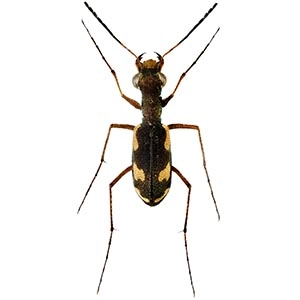
The genus Bennigsenium currently comprises approximately nine recognized species, all endemic to sub-Saharan Africa. The known species include:
- Bennigsenium planicorne W. Horn, 1897 (type species)
- Bennigsenium hauseranum W. Horn, 1905
- Bennigsenium ismenioides (W. Horn, 1913)
- Bennigsenium bodongi (W. Horn, 1914)
- Bennigsenium discoscriptum (W. Horn, 1914)
- Bennigsenium grossumbreve (W. Horn, 1914)
- Bennigsenium insperatum (H. Kolbe, 1915)
- Bennigsenium grossesculptum Cassola & Werner, 2003
Several of these species were originally described in other genera, particularly Cicindela and Cosmema, before being transferred to Bennigsenium. The genus Cosmema Boheman, 1848, was later synonymized with other African tiger beetle genera, and various species originally placed in Cosmema were redistributed across multiple genera, including Bennigsenium.
The most recent addition to the genus is Bennigsenium grossesculptum, described by Fabio Cassola and Karl Werner in 2003. This represents the only species described in the twenty-first century, reflecting both the historical focus of taxonomic work on African tiger beetles and the relative rarity of these insects in recent collections.
Diagnostic Characteristics
As members of the Cicindelidae, species of Bennigsenium exhibit the characteristic features of the family: elongate bodies adapted for cursorial predation, large prominent eyes providing excellent vision for hunting, powerful sickle-shaped mandibles for capturing and subduing prey, long legs enabling rapid running, and often metallic or iridescent coloration.
The specific diagnostic characters that distinguish Bennigsenium from other African tiger beetle genera are technical morphological features best examined through specialist literature and comparison with type specimens. These include details of pronotal structure, elytral sculpture and maculation patterns, genitalic morphology, and other characters utilized in tiger beetle taxonomy. The genus is included within the comprehensive treatments of African Cicindelidae provided by Werner in his two-volume work on African tiger beetles.
Bionomics – Mode of Life
General Biology
As tiger beetles, species of Bennigsenium are obligate predators in both larval and adult stages, playing important roles as invertebrate predators within their ecosystems. Like all Cicindelidae, these beetles exhibit complete metamorphosis with distinct egg, larval, pupal, and adult life stages. However, specific detailed biological observations for Bennigsenium species remain limited in the published scientific literature, reflecting the general scarcity of detailed ecological studies on many African tiger beetle taxa.
Larval Biology
Tiger beetle larvae, including those presumed for Bennigsenium species, are specialized ambush predators that construct vertical burrows in suitable substrate. The burrow serves as both a refuge and a hunting platform. The larva positions itself at the burrow entrance with its large, flattened head blocking the opening, waiting for passing arthropod prey. When suitable prey approaches, the larva strikes rapidly, seizing the prey item with its powerful mandibles before retreating into the burrow to consume the capture.
The larval stage typically consists of three instars, each progressively larger. Development time varies depending on environmental conditions, prey availability, and species-specific factors. Larvae possess hooks on the dorsal surface of the fifth abdominal segment that anchor them within the burrow, preventing prey from dragging them out during struggles.
Adult Behavior
Adult tiger beetles are characteristically diurnal, visually-oriented hunters that actively pursue prey across terrestrial substrates. They are among the fastest running insects, capable of remarkable bursts of speed when chasing prey or evading threats. Adults typically feed on small arthropods including various insects and other invertebrates encountered in their habitats.
The visual acuity of adult tiger beetles is exceptional, with their large compound eyes providing keen perception of movement and detail. This visual capability is essential for both hunting and mate location. Adults are generally sun-loving insects, most active during warm, sunny conditions when both the beetles and their prey are most active.
Ecological Role
As predators at multiple trophic levels, Bennigsenium species contribute to the regulation of smaller arthropod populations within African ecosystems. Tiger beetles are frequently considered indicator species for habitat quality and environmental conditions, as many species show specific habitat requirements and sensitivity to disturbance. The presence and diversity of tiger beetle assemblages can provide insights into ecosystem health and integrity.
Distribution
Geographic Range
The genus Bennigsenium exhibits a distribution restricted to sub-Saharan Africa, demonstrating the characteristic African endemism seen in numerous tiger beetle genera on the continent. The genus does not occur in Madagascar or on other African island systems, being confined to the African mainland south of the Sahara Desert.
Werner’s comprehensive treatment of African tiger beetles provided detailed distributional data for the genus, documenting occurrences across multiple African countries. The genus appears to be centered primarily in East African regions, though the full extent of its range encompasses portions of both eastern and southeastern Africa.
Country-Level Distributions
Based on available literature, Bennigsenium species have been recorded from several African nations:
Tanzania: Tanzania appears to represent an important center of distribution for the genus, with multiple species documented from various regions of the country. The diverse habitats present in Tanzania, ranging from coastal lowlands to highland regions, provide varied ecological conditions potentially suitable for different Bennigsenium species.
Kenya: Kenya constitutes another significant region for Bennigsenium occurrences, with specimens documented from various localities within the country. Kenya’s ecological diversity, including savanna, woodland, and highland habitats, contributes to its importance for African tiger beetle diversity.
Mozambique: Bennigsenium bodongi has been specifically recorded from Mozambique, indicating the presence of the genus in southeastern coastal Africa. Mozambique’s extensive coastline and diverse inland habitats provide varied ecological conditions.
Additional countries may host Bennigsenium populations, but comprehensive distributional data require consultation of specialized systematic literature including Werner’s monographic treatment and museum collection records.
Biogeographic Context
The African tiger beetle fauna represents one of the most diverse regional assemblages globally, with approximately 400 species recognized from sub-Saharan Africa alone (excluding Madagascar). This diversity reflects Africa’s varied climates, habitats, and long evolutionary history of tiger beetle lineages. Bennigsenium represents one component of this rich fauna, contributing to the overall cicindelid diversity of the continent.
East Africa, where Bennigsenium appears most diverse, is recognized as a significant center of beetle endemism and diversity more broadly. The region’s geological complexity, climatic variation, and habitat heterogeneity have facilitated the evolution of numerous endemic insect lineages, including distinctive tiger beetle taxa.
Preferred Habitats
General Habitat Associations
Detailed habitat data specific to Bennigsenium species are limited in the accessible scientific literature. However, inferences can be drawn from the ecological characteristics of East African tiger beetle assemblages and the general habitat requirements documented for the family Cicindelidae. Tiger beetles typically occupy habitats that provide suitable conditions for larval burrow construction, adequate prey availability for both larvae and adults, and appropriate microclimatic conditions.
Substrate Requirements
Tiger beetle larvae require suitable substrate for burrow construction, with substrate texture, compaction, moisture content, and stability all influencing larval habitat suitability. Different species show preferences for varying substrate types, from loose sand to firm clay soils. The substrate must be sufficiently firm to maintain burrow integrity while allowing larval excavation. Adult tiger beetles often occur in areas with at least some exposed soil or open ground, facilitating their cursorial hunting strategy and thermoregulatory behaviors.
East African Habitat Diversity
The East African region where Bennigsenium occurs encompasses tremendous habitat diversity, including:
- Coastal habitats and sandy areas near the Indian Ocean
- Savanna woodlands with seasonal rainfall patterns
- Highland and montane regions with cooler temperatures
- River valleys and drainage systems
- Transitional zones between different vegetation types
Different Bennigsenium species likely occupy distinct niches within this habitat mosaic, with each species adapted to particular environmental conditions, substrates, and ecological settings.
Conservation Considerations
Like many African insects, tiger beetles face conservation challenges related to habitat loss, degradation, and transformation. Agricultural expansion, urbanization, and other anthropogenic pressures affect natural habitats across Africa. The conservation status of individual Bennigsenium species has not been formally assessed, but the restricted distributions typical of many tiger beetle species suggest potential vulnerability to habitat changes.
Comprehensive field surveys documenting the current distributions, population sizes, and habitat associations of Bennigsenium species would provide valuable information for conservation assessment and planning. Protected areas in East Africa, including national parks and reserves in Tanzania, Kenya, and Mozambique, likely harbor populations of various species and contribute to the conservation of African tiger beetle diversity.
Scientific Literature Citing the Genus
Original Descriptions and Early Taxonomic Works
Modern Taxonomic Contributions
Comprehensive Regional Treatments
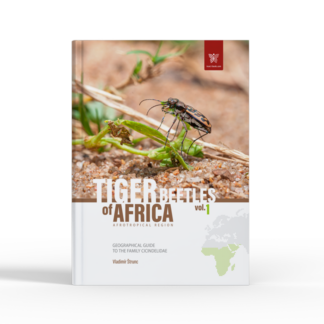
This volume treats twenty-four genera of African tiger beetles, including Bennigsenium, with 205 species presented. The work includes 779 color photographs, distribution maps, complete species lists for each African country, and extensive bibliographic references. This represents the most comprehensive modern treatment of the genus.
Together, Werner’s two-volume work covers 396 species in 34 genera from sub-Saharan Africa, providing the foundational modern reference for African tiger beetle taxonomy, including all genera and species with detailed illustrations, locality data, and historical context.
Nomenclatural and Systematic References
General Cicindelidae References
Phylogenetic and Systematic Studies
Note on Research Needs: The genus Bennigsenium exemplifies the numerous African tiger beetle taxa that merit detailed biological and ecological investigation. While the taxonomic framework has been established through the work of Horn, Werner, Cassola, and other specialists, comprehensive field studies documenting the natural history, habitat requirements, population dynamics, and conservation status of individual species remain limited.
Future research priorities for Bennigsenium include: comprehensive field surveys across East Africa to document current distributions and assess population status; detailed ecological studies of habitat preferences and microhabitat requirements; investigations of larval biology and development; molecular phylogenetic analyses to clarify relationships within the genus and with related African genera; and conservation status assessments for individual species.
Such research would contribute significantly to our understanding of African tiger beetle diversity and inform conservation strategies for these specialized predatory insects. The genus Bennigsenium, as a distinctly African lineage, represents an important component of the continent’s unique entomological heritage and merits continued scientific attention and conservation consideration.