Genus Abroscelis Hope, 1838
(Cicindelidae)
A Comprehensive Review of Coastal Tiger Beetles
The Ultimate Visual Guide to Tiger Beetles
The Ultimate Visual Guide to Tiger Beetles
Systematics
Taxonomic Position
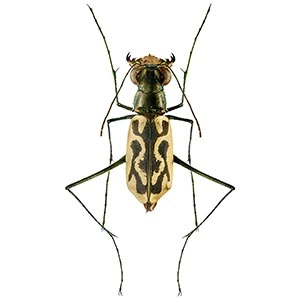
The genus Abroscelis Hope, 1838 belongs to the family Cicindelidae, commonly known as tiger beetles. Within the systematic hierarchy, this genus is classified as follows:
- Order: Coleoptera
- Suborder: Adephaga
- Family: Cicindelidae
- Tribe: Cicindelini
- Subtribe: Cicindelina
- Genus: Abroscelis Hope, 1838
Original Description and Type Material
The genus Abroscelis was established by Frederick William Hope in 1838 in his work “The Coleopterist’s Manual, Part the Second, Containing the Predaceous Land and Water Beetles of Linnaeus and Fabricius,” published in London by Henry G. Bohn. The original description appeared on page 19 of this comprehensive taxonomic treatise. Hope’s work represented a significant contribution to early 19th-century entomological systematics, providing detailed descriptions of predaceous beetles from the collections of Linnaeus and Fabricius.


Synonymy Genus Abroscelis
Two junior synonyms have been established for this genus:
- Habroscelis Agassiz, 1847
- Podabra Hope, 1838
Species Composition
The genus Abroscelis currently comprises six recognized species:
- Abroscelis anchoralis (Chevrolat, 1845)
- Abroscelis longipes (Fabricius, 1798)
- Abroscelis maino (W. J. MacLeay, 1876)
- Abroscelis mucronata (Jordan, 1894)
- Abroscelis psammodroma (Chevrolat, 1845)
- Abroscelis tenuipes (Dejean, 1826)
Several subspecies have been described within this genus, demonstrating geographical variation. For example, Abroscelis tenuipes includes at least two recognized subspecies: A. t. tenuipes (Dejean, 1826) and A. t. araneipes (Schaum, 1863). Similarly, Abroscelis anchoralis includes the subspecies A. a. anchoralis and A. a. punctatissima (Schaum, 1863).
Bionomics – Mode of Life Genus Abroscelis
Life Cycle and Development
Members of the genus Abroscelis exhibit complete metamorphosis (holometaboly), characteristic of all Coleoptera. The life cycle includes egg, larval (with three instars), pupal, and adult stages. Research on Abroscelis anchoralis has provided valuable insights into the reproductive biology of this genus. Female beetles lay an average of 70 eggs during their lifespan under optimal feeding conditions. Adult beetles typically live for approximately 100 days, with no significant difference in longevity between males and females.
Larval Biology Genus Abroscelis
The larvae of Abroscelis species exhibit highly specialized burrowing behavior, constructing vertical cylindrical burrows in sandy substrates. These larvae are sit-and-wait ambush predators, positioning themselves at the burrow entrance to capture passing prey. The larvae possess characteristically large heads with powerful mandibles, adapted for seizing prey items.
Larval development in coastal species such as A. anchoralis requires longer periods compared to other tiger beetle species, likely due to the challenging environmental conditions of beach habitats that are periodically flooded by tides. The larvae demonstrate remarkable adaptations to their semi-aquatic environment, including specialized burrowing behaviors and physiological mechanisms to cope with periodic inundation.
Adult Behavior and Feeding
Adult Abroscelis beetles are active predators, hunting small arthropods on coastal substrates. Research on A. anchoralis has documented their feeding preferences, showing they predominantly forage on juvenile talitrid amphipods (beach hoppers) that colonize stranded wrack material on sandy shores. Adults are diurnal hunters, actively pursuing prey during daylight hours, particularly in areas where stranded marine vegetation accumulates.
Conservation Biology
Several species within the genus face conservation challenges due to habitat degradation and loss of coastal environments. Abroscelis anchoralis populations in South Korea have been classified as endangered, with populations rapidly decreasing due to coastal development and habitat destruction. Successful captive propagation methods have been established for this species, achieving 92% survival rates for first instar larvae and demonstrating the potential for ex-situ conservation and population reinforcement programs.
Distribution
Geographic Range
The genus Abroscelis exhibits a primarily Asian distribution, with species occurring across coastal regions of East Asia, Southeast Asia, and extending to the western Pacific islands.
Species-Specific Distributions
Abroscelis anchoralis: This species demonstrates a relatively wide distribution along East Asian coastlines. The nominate subspecies A. a. anchoralis has been recorded from China (including provinces of Liaoning, Beijing, Hebei, Shandong, Zhejiang, Guangdong, Hainan, Hong Kong, and Macao), Taiwan, South Korea, and Japan. The subspecies A. a. punctatissima (Schaum, 1863) is documented from Japan, particularly from Ishikawa Prefecture.
Abroscelis tenuipes: This species shows an extensive Southeast Asian distribution. The nominate subspecies A. t. tenuipes occurs in Vietnam (including provinces of Ba Ria-Vung Tau, Binh Dinh, Da Nang, Khanh Hoa, Nghe An, and Thanh Hoa) and Cambodia. The subspecies A. t. araneipes has been recorded from Vietnam (Ba Ria-Vung Tau, Nghe An), Cambodia (Poulo Island), Malaysia (Borneo, including Sarawak and Brunei Darussalam), and the Philippines (Palawan).
Abroscelis longipes: Documented records indicate this species occurs in Indonesia, specifically on the island of Sumatra, where specimens have been collected from Indrapura.
Abroscelis maino: The distribution of this species requires further documentation in the scientific literature.
Abroscelis mucronata: Detailed distributional data for this species remain limited in available scientific publications.
Abroscelis psammodroma: The geographic range of this species requires additional taxonomic and faunistic investigation.
Biogeographic Patterns
Phylogeographic studies on Abroscelis anchoralis populations in Japan have revealed complex evolutionary patterns. Molecular analyses using mitochondrial DNA sequences indicate past fragmentation events that resulted in three isolated population areas within the Japanese archipelago. These findings suggest that geological and climatic changes during the Pleistocene significantly influenced the current distribution patterns and genetic structure of coastal tiger beetle populations.
Preferred Habitats
Primary Habitat Type
Species of Abroscelis are predominantly associated with coastal sandy beach environments. They represent highly specialized inhabitants of the supralittoral zone, occupying the interface between marine and terrestrial ecosystems. These beetles are characteristic elements of sandy shore fauna and serve as important indicators of beach ecosystem health.
Microhabitat Preferences
Within coastal environments, Abroscelis species demonstrate specific microhabitat associations. Adults are frequently encountered on open sandy beaches, particularly in areas receiving periodic tidal influence. Research on A. anchoralis in Japan has documented their strong association with beach wrack zones, where accumulations of stranded marine vegetation support dense populations of amphipods and other invertebrates that serve as prey.
Larval burrows are constructed in sandy substrates of appropriate grain size and moisture content. Beach tiger beetle larvae require specific physical conditions for successful burrow construction and maintenance. The periodically flooded nature of their beach habitats necessitates adaptations to withstand both desiccation during low tide periods and inundation during high tides.
Substrate Requirements
Research on tiger beetle habitat associations has demonstrated that Abroscelis populations show preferences for beaches with specific physical characteristics. Higher beetle abundance has been associated with finer sand grains, steeper berm slopes, and beaches located at greater distances from river mouths. These habitat preferences reflect the species’ requirements for appropriate substrate stability, moisture retention, and prey availability.
Environmental Tolerances
Coastal tiger beetles in the genus Abroscelis have evolved physiological and behavioral adaptations to cope with the harsh conditions of beach habitats, including high temperatures, variable substrate moisture, intense solar radiation, and salt spray. Their presence is often limited to beaches with minimal anthropogenic disturbance, as urbanization and intensive tourism activities significantly impact population viability.
Regional Habitat Variations
While the genus is primarily associated with marine sandy beaches, some species or populations may occur in specialized coastal variants of this habitat type. For instance, populations have been documented from kerrangas heath forest edges near white sand areas in Borneo, suggesting that at least some species may exploit transitional zones between beach and terrestrial forest habitats when attracted to light sources.
Conservation Implications
The specialized habitat requirements of Abroscelis species make them particularly vulnerable to coastal development, beach cleaning operations, and climate change impacts. Mechanical beach cleaning, which removes stranded wrack and alters beach topography, can significantly reduce the prey base and disrupt larval microhabitats. Conservation of these species requires the preservation of natural beach processes and the maintenance of undisturbed sandy shoreline segments.
Scientific Literature Citing the Genus
Taxonomic and Systematic Studies
Regional Faunal Studies
Ecological and Behavioral Studies
Phylogeography and Evolution
Conservation Biology
Database and Catalog References
Genus Abroscelis
Note: This article represents a synthesis of currently available scientific literature on the genus Abroscelis. Taxonomic understanding and distributional knowledge continue to evolve as new research is conducted. Readers are encouraged to consult the primary literature for detailed information on specific species or regional faunas.