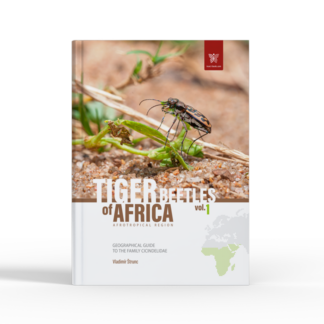
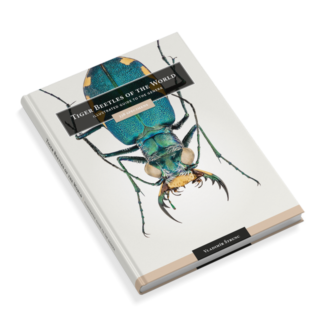
Cicindela campestris (Cicindelidae)
General Species Characterisation
Cicindela campestris is a conspicuous and highly mobile predatory beetle belonging to the family Cicindelidae. It is one of the most well-known and widely studied tiger beetles in Europe, renowned for its exceptional running speed, agility, and visually striking appearance. Adults typically measure 12–15 mm in body length and are most active under warm, sunny conditions.
The species is a diurnal, visually oriented predator that relies on speed, acute vision, and rapid flight to capture prey and evade predators. Its behaviour and morphology make it a classic model organism for studies of insect locomotion, predator–prey interactions, and habitat specialization.
Taxonomy and Diagnostic Features
Cicindela campestris belongs to:
-
Order: Coleoptera
-
Family: Cicindelidae
-
Genus: Cicindela Linnaeus, 1758
Adults are readily recognizable by their metallic green to bronze elytra, often with a vivid iridescent sheen, marked by distinct pale maculations. These markings vary slightly between individuals but remain consistent enough to allow reliable identification.
-
Head: Relatively large, with strongly developed mandibles and prominent compound eyes that provide excellent visual acuity for detecting moving prey.
-
Thorax and legs: The thorax is narrow, and the legs are long and slender, enabling rapid acceleration and abrupt changes of direction.
-
Wings: Fully developed; adults are capable of short, fast flights, typically used to escape disturbance or relocate over small distances.
The combination of cursorial speed and flight capacity is a defining trait of tiger beetles and is especially well expressed in C. campestris.
Distribution and Habitat
Geographic Range
Cicindela campestris is widely distributed across most of Europe and extends into parts of western and central Asia. Within its range, it is generally widespread and locally common, particularly in regions with suitable open habitats.
Habitat Preferences
The species inhabits open, sun-exposed, and dry environments, including:
-
sandy or compacted tracks and paths,
-
field margins and fallow land,
-
pastures and grasslands,
-
forest edges and clearings,
-
quarries, sand pits, and riverine deposits.
A key habitat requirement is sparse vegetation cover, which provides unobstructed ground for high-speed pursuit while maintaining sufficient prey availability. Dense vegetation and heavy shading are generally avoided.
Behaviour and Activity Patterns
Cicindela campestris is a strictly diurnal species, with peak activity during spring and summer. Adults exhibit a characteristic stop-and-go movement pattern: rapid bursts of running interspersed with brief pauses during which the beetle visually scans its surroundings.
When threatened, individuals typically take flight abruptly and land a short distance away, often repeating this behaviour multiple times. This strategy reduces predation risk while allowing the beetle to remain within its preferred microhabitat.
Feeding Ecology and Predation
Cicindela campestris is an active predator feeding primarily on:
-
small insects,
-
spiders,
-
arthropod larvae.
Prey is located visually and captured using swift pursuit combined with powerful mandibles. The species is capable of subduing prey nearly equal to its own size, highlighting its role as a dominant predator within open-ground arthropod communities.
Larvae are also predatory and play a significant role in local food webs, often exerting substantial predation pressure on soil-surface invertebrates.
Reproduction and Development
Reproduction occurs in spring and early summer. Females deposit eggs individually into suitable soil substrates, typically in open, sunlit areas with appropriate soil structure.
Larval Ecology
Upon hatching, the larva excavates a vertical burrow in the soil, where it spends the majority of its development. The larva positions itself near the burrow entrance, anchoring its body with specialized hooks on the abdomen, and ambushes passing prey with rapid strikes.
Larval development includes several instars and may last one to several years, depending on climatic conditions, prey availability, and soil characteristics. Pupation occurs within the burrow, after which the adult emerges, usually in spring, and immediately adopts an active surface-dwelling lifestyle.
Ecological Significance
Cicindela campestris is an important component of open-landscape ecosystems. As an efficient predator, it contributes to the regulation of small arthropod populations and influences community structure at the soil surface.
The species is widely regarded as an indicator of well-preserved open habitats with low to moderate land-use intensity. Stable populations are typically associated with heterogeneous landscapes that maintain patches of bare or sparsely vegetated ground.
Conservation Considerations
Although Cicindela campestris is not currently classified as critically endangered across most of its range, local populations may be threatened by:
-
encroachment of vegetation due to land abandonment,
-
agricultural intensification,
-
habitat fragmentation,
-
pesticide application.
Effective conservation measures include maintaining a mosaic of open habitats, limiting chemical inputs, and preserving natural disturbance regimes that prevent excessive vegetation cover. The species benefits from landscape management practices that sustain structural heterogeneity and open ground conditions.